Beyond Video Calls: Simple Tech That Keeps My Family Connected Every Day
We’ve all tried video calls with grandparents—sometimes they work, sometimes they don’t. But what if staying close wasn’t about perfect connections, yet about small, meaningful moments shared effortlessly? I used to worry about my parents feeling left out of my life, until I discovered how simple digital tools quietly brought us closer. This isn’t about fancy gadgets—it’s about real connection, made easy. It’s not about mastering technology. It’s about letting technology serve what matters most: love, presence, and the quiet joy of knowing someone is thinking of you, even when miles apart.
The Distance That Didn’t Show on the Map
On paper, my parents and I weren’t far—just a two-hour drive. But life has a way of stretching space. Between school drop-offs, work deadlines, and the endless rhythm of keeping a household running, weeks would slip by without a real conversation. My mom would ask, “How’s everything?” and I’d say, “Fine,” even when “fine” meant surviving on coffee and laundry piles. Meanwhile, my parents were living full lives too—gardening, visiting neighbors, watching their favorite shows—but I only heard highlights, if that. The little things slipped through the cracks: my daughter’s first attempt at baking cookies, my son’s goofy dance moves in the kitchen, the way the light hits our backyard in late afternoon. These weren’t just moments—they were pieces of our story, and they were going unshared.
It wasn’t that we didn’t care. We loved each other deeply. But caring doesn’t always translate into connection, especially when life gets loud. I realized I was waiting for the “right time” to call—when I wasn’t rushing, when the kids were quiet, when I had something “important” to say. But that perfect moment never came. And for my parents, calling felt like an interruption. “I don’t want to bother you,” my mom would say. “You’re so busy.” That line broke my heart. No one should feel like love is a burden. We were all trying, but we were trying in ways that didn’t fit our real lives. The gap wasn’t in miles—it was in the way we were trying to bridge it.
Why “Just Call” Wasn’t Enough
People always say, “Just call them.” It sounds so simple. But for families spread across time zones or generations, “just calling” isn’t always the answer. Timing is tricky. My dad wakes up at 6 a.m. to walk the dog; I’m usually still getting the kids dressed for school. By the time I finish work, he’s already had dinner and settled in for the night. Finding a shared window that works for everyone? Nearly impossible. And even when we did connect, the calls often felt rushed or awkward. “How are you?” “Good. You?” “Good.” And then silence. We weren’t avoiding each other—we were just out of practice at being present without an agenda.
Then there’s the tech barrier. My mom loves her flip phone. She doesn’t want to learn new apps. My dad can barely find the camera on his tablet without help. Asking them to download something, create an account, remember passwords—it felt like setting up a barrier instead of breaking one down. I used to think connection required effort: scheduling calls, setting reminders, making sure everyone was ready. But that kind of effort is exhausting. It turns love into a to-do list. What we needed wasn’t more effort—it was less. We needed ways to stay connected that didn’t feel like work. I began to wonder: what if technology could help us share life as it happens, without asking anyone to change who they are?
The First Tool That Actually Worked: Shared Photo Streams
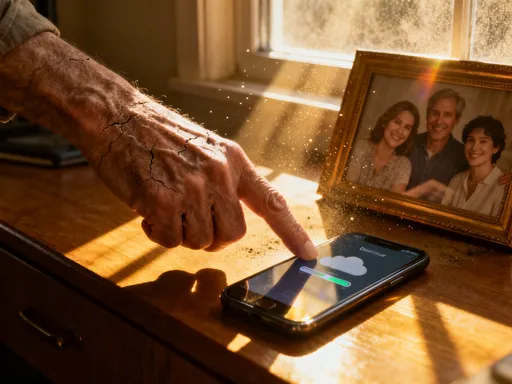
The turning point came when I stopped trying to get my parents to join my world and started bringing my world to theirs. I created a private family photo album using a widely used cloud-based service—one that automatically syncs across devices. I didn’t ask them to download anything. I just shared the album with their email addresses. From that moment on, every time I took a photo I wanted to share—my daughter holding a ladybug, my son wearing mismatched socks to school, our dog sprawled across the couch—it appeared instantly in that shared space.
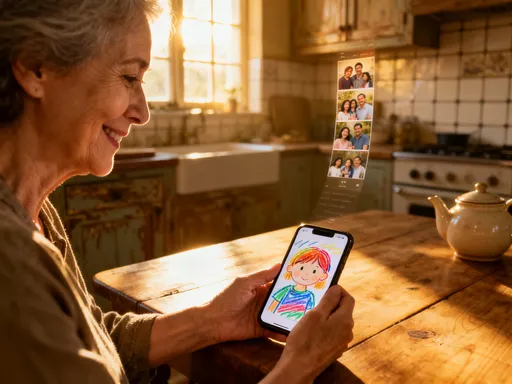
Here’s the magic: they didn’t have to do anything. No logging in, no passwords, no tapping through menus. If they opened their photos app, there it was. And if they didn’t? That was okay too. The photos still arrived. One morning, my mom called me, her voice warm with surprise: “I saw the picture of Lily’s drawing—the one with the rainbow cat. I showed it to my book club. They all said she’s going to be an artist!” That moment hit me. She wasn’t just seeing a photo. She was participating. She was proud. She was part of the story.
What I love most is how these small visual updates created a rhythm of connection. My dad started noticing patterns—“You’ve been baking a lot lately”—and that opened the door to conversations about recipes, comfort food, even his own childhood memories of his mother’s kitchen. The photo stream wasn’t about capturing perfection. It was about sharing the real, unfiltered moments that make up a life. And because it required almost no effort, it became sustainable. We weren’t performing for each other. We were simply living—and letting each other in.
Voice Notes: The Warmth of a Voice Without the Pressure
Texting is fast, but it’s also flat. A simple “I’m thinking of you” can feel distant when typed. And video calls? They’re wonderful when they work, but they demand so much—being presentable, having good lighting, finding quiet. Sometimes, all I want is to share a moment, not a production. That’s when I discovered the power of voice notes. They’re like little audio hugs—casual, warm, and full of life.
I started sending them during small pauses in the day. Waiting in the school pickup line? “Hey Mom, just wanted to say the sky is pink today—reminds me of those sunsets we used to watch at the lake.” Making dinner? “Dad, the dog just tried to eat a sock again. I think he’s auditioning for a cartoon.” These weren’t long messages. Most were under 30 seconds. But they carried something texts never could: my tone, my laugh, the background noise of my real life. And my parents began responding the same way. I’d open my phone to hear my dad’s voice: “Just saw a cardinal in the yard—thought you’d like that.” Or my mom: “Made your favorite soup today. Smells like home.”
What surprised me was how these voice notes created emotional closeness without pressure. No one had to be “on.” No need to schedule. No fear of interrupting. It was asynchronous intimacy—connection on our own terms. My kids even got in on it. My son recorded a voice note of him singing a silly song, and my parents played it for their friends. It wasn’t just about staying in touch. It was about feeling included. And for my parents, who sometimes feel invisible in the whirlwind of modern life, these little audio messages said, “You matter. We see you. We’re sharing our world with you.”
Calendar Sharing Without the Overload
One of the quietest but most powerful tools we adopted was a shared family calendar. Now, before you roll your eyes and think, “Here we go, another productivity hack,” let me say: this wasn’t about efficiency. It wasn’t about color-coding every minute of the day. It was about care. It was about making sure no one felt out of the loop.
I created a simplified calendar—just one with birthdays, doctor appointments, school events, and planned visits. I shared it with my parents, and they shared theirs with me. That’s it. No access to every detail of each other’s lives. Just enough to stay gently connected. When I added “Family Dinner – Our House” to the calendar, my mom could see it and start planning what dessert to bring. When my dad had a medical appointment, I could send a quick text that evening: “How did it go?” without having to ask, “Wait, was today the appointment?”
It eliminated so much of the mental load. No more calling to confirm dates. No more forgetting important moments. No more “I didn’t know you were visiting!” The calendar became a silent language of love. It said, “I’m thinking of you. I want to be part of your life.” And it gave my parents a sense of stability. They could look ahead and see when they’d see their grandchildren. That anticipation brought joy. For me, knowing they were aware of our schedule meant I didn’t have to carry the entire weight of keeping us connected. The calendar did some of the work—quietly, consistently, without fanfare.
When Tech Disappears, Connection Stays
The most beautiful part of all this? We stopped noticing the technology. The photo album wasn’t an app. It was Grandma seeing her granddaughter’s artwork before anyone else. The voice note wasn’t a digital file. It was Dad’s laughter filling my kitchen while I folded laundry. The calendar wasn’t software. It was peace of mind. The tools faded into the background, and what remained was something deeper: presence.
Connection stopped being an event and became a rhythm. It wasn’t something we had to schedule or strive for. It was woven into the fabric of our days. I didn’t have to set aside time to “call home.” Home came to me—in a photo, a voice, a shared date. And for my parents, they weren’t waiting for updates. They were living them, moment by moment. They weren’t on the outside looking in. They were inside, part of the flow.
That shift changed everything. I stopped feeling guilty about not calling enough. Instead, I felt grateful for the ways we were staying close, even when we were apart. The technology didn’t replace our love—it amplified it. It gave us new ways to express what we already felt. And the best part? It required no big changes. No learning curves. No pressure. Just small, consistent gestures that added up to something meaningful.
Building Your Own Quiet Connection
If you’re reading this and thinking, “That sounds nice, but my family isn’t tech-savvy,” I hear you. You don’t need the latest device. You don’t need everyone to be online all the time. You just need one starting point. Pick one small moment you’d love to share—a photo of your morning coffee, a quick voice note from the park, a calendar invite for your child’s school play. Choose one tool that feels doable. Try a shared photo album. Send a 20-second voice message tonight. Invite one family member to view a simple calendar.
Keep it low-stakes. Don’t aim for perfection. Let it grow naturally. Maybe your mom won’t check the album every day. Maybe your dad will forget how to play the voice note at first. That’s okay. The goal isn’t digital fluency. It’s emotional closeness. It’s about creating a space where love can flow more easily, even when life gets busy. Over time, these small acts build a quiet rhythm of connection. They say, “I’m thinking of you,” without requiring a grand gesture.
And if you’re worried about pushing too hard, remember: this isn’t about changing your family. It’s about meeting them where they are. Use tools that fit their comfort level. Let them engage on their own terms. Some days, they might listen to every voice note. Other days, they might just glance at a photo. But each moment is a thread, weaving them into your life in a way that feels gentle and natural.
Staying close shouldn’t be hard. It shouldn’t require perfect timing or tech expertise. With the right approach, it can be as simple as a tap, a voice, or a shared glance at tomorrow’s plans. These small digital gestures don’t replace hugs or shared meals. But they prepare the ground for them. They keep the bond alive between visits. They remind us that love isn’t measured in hours spent together—it’s measured in moments of feeling seen, heard, and remembered.
So start small. Be patient. Be kind—to yourself and to your family. Let technology do the heavy lifting of delivery, while you focus on what really matters: sharing your life, one quiet moment at a time. Because in the end, it’s not about the tools we use. It’s about the love we keep alive. And that’s something worth every tap, every message, every shared photo.